
The Category Is a Management Technology
Your competitive set was built a century ago.

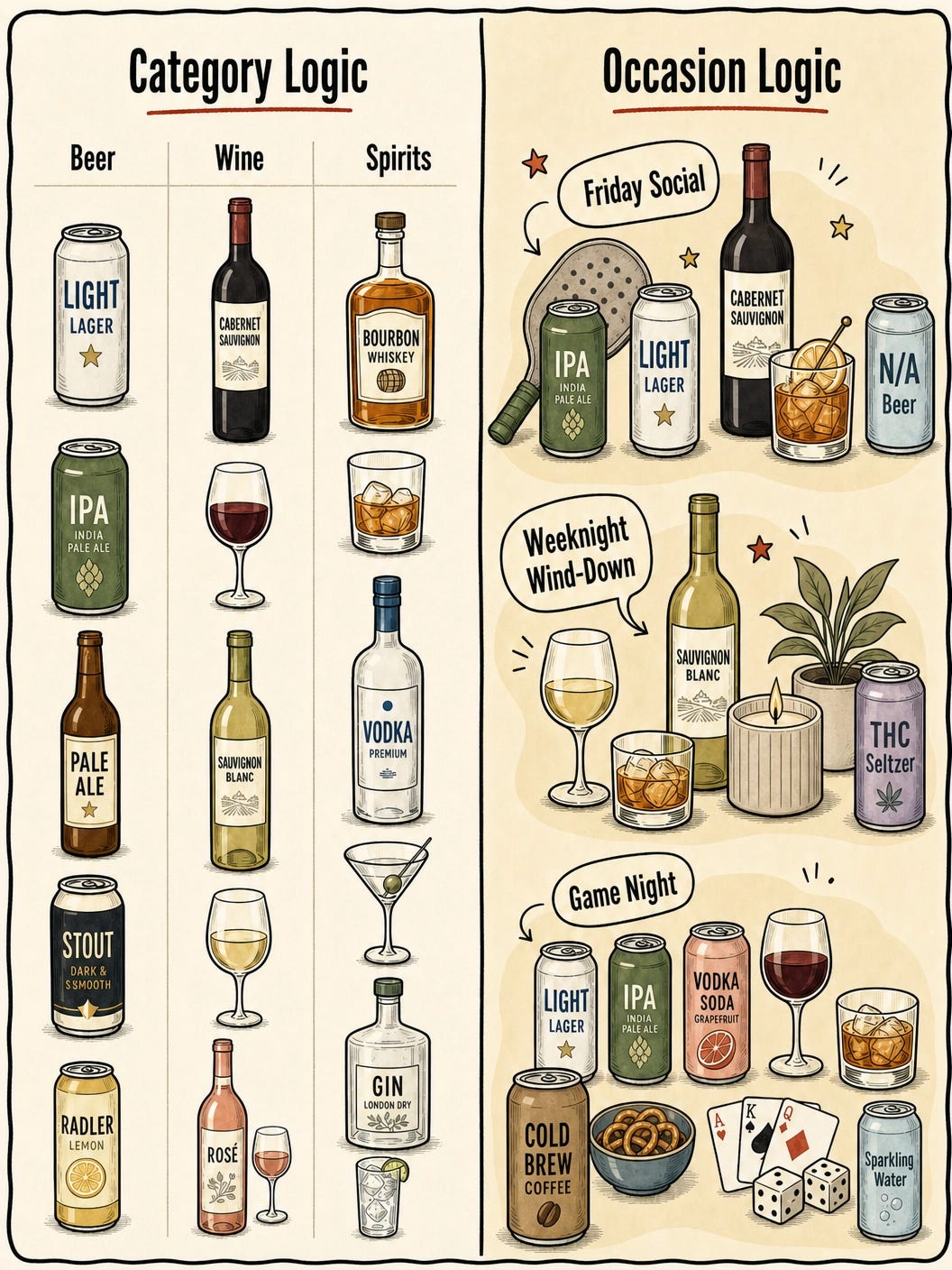
The standard version of the story goes like this: In 1916, Clarence Saunders opened a grocery store in Memphis called Piggly Wiggly and invented the self-serve grocery store. Before Piggly Wiggly, you told a clerk what you wanted and the clerk retrieved it. After Piggly Wiggly, you walked the aisles yourself. The shelf became the interface. Adjacency became logic. Beer lived next to beer. Wine lived next to wine. The store taught you how to compare things, and what you compared depended entirely on what was shelved near what.
That version is on the state historic marker. The truth is slightly more complicated.
Self-serve grocery experiments were operating in Walla Walla in 1913, Tucson in 1914, and across California by 1915. What Saunders actually did was file the patents, build the chain, and scale the concept nationally until it became the only logic anyone could see. By 1922, there were 1,300 Piggly Wiggly locations. He standardized the business model.
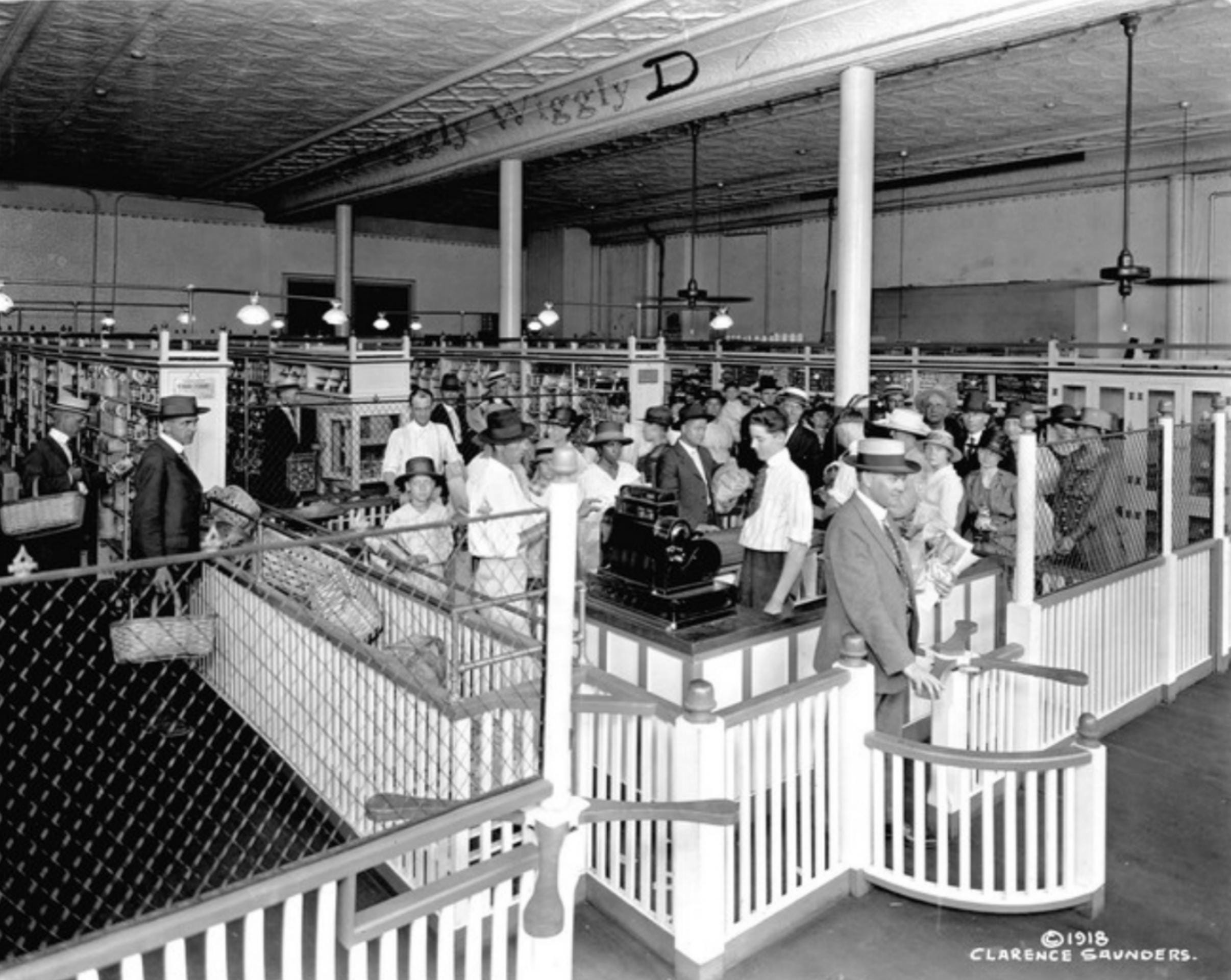
In the context of beverage alcohol, shelves reinforced and operationalized pre‑existing trade and tax category structures. At some point the logic became invisible and nobody thought to ask whether the shelf was describing how people shop or just describing how companies organized their floors.
My last piece argued that the consumer is a context: the same person running different decision logic in different moments. The corollary is simpler. The shelf was built for a person who doesn’t exist.

Shelves Follow Systems; Occasions Follow People
IWSR’s Bevtrac research, conducted across 15 key markets in September 2025, found that the average number of beverage alcohol categories consumed per occasion fell, while single-category occasions rose. Among younger cohorts, the compression is sharper: Gen Z and Millennial consumers moved from 2.8 categories per occasion to 1.8 over the same period. Richard Halstead, COO Consumer Research at IWSR, described what that means for competition: “The reduction in volume and multi-category usage at an occasion will serve to increase competition for that ‘first drink,’ which might be the only drink of the night.”
That sentence contains the problem. The shelf organized commerce around categories competing with other categories. IWSR is describing is a world where the average number of categories per occasion is falling and single‑category occasions are rising. This suggests sharper competition for that “first drink,” which may be the only drink of the night.
The shelf could not see this coming because the shelf was never measuring it. Category management, as NielsenIQ defines it, is a shared process for managing categories as strategic business units, with tactics built around assortment, price, promotion, and shelf-space optimization. That system works at organizing supply. It was never designed to map the consumer’s actual decision logic.
The measurement asymmetry this creates is structural. Brown-Forman’s investor materials split performance into portfolio clusters: the Jack Daniel’s family of brands, tequila, RTD, by region. Constellation reports Beer and Wine & Spirits as separate segments with separate operating margins. Diageo breaks growth narratives into category buckets and geographies. These structures make category performance highly legible and cross-category occasion substitution nearly invisible. A brand team can track exactly how Jack Daniel’s Tennessee Whiskey is performing against competitive whiskeys. It has far weaker visibility into how many occasions that used to call for a whiskey are now calling for a THC seltzer, a CBD water, or nothing at all. Brands use basket and occasion research, but in a way that’s embedded in core P&L/category structures.
NielsenIQ reported in April 2026 that THC beverages reached $239 million in the latest 52 weeks, growing 135% year over year, with 50% of U.S. adults expressing interest in trying cannabis-infused beverages. NIQ framed it directly: “Suppliers and retailers need to understand where these products fit within consumer repertoires and occasions.” The category management question for alcohol is which aisle THC belongs on. The consumer’s question is simpler. What do I want to feel like tonight, and what’s the easiest path there?
That question does not begin and end in the alcohol aisle.
What Aisle Is Celsius On?
Celsius is a cleaner illustration of what occasion escape looks like from the inside. At CAGNY in February 2026, Celsius described its category transformation in explicit terms: energy had moved from “a narrow transactional category driven by impulse purchases” to “a lifestyle-driven one,” with usage spreading across dayparts, trip types, and consumers who weren’t previously energy drink users. Celsius’s own data showed 33% of consumers drinking it as a social drink, 37% consuming it with a meal.
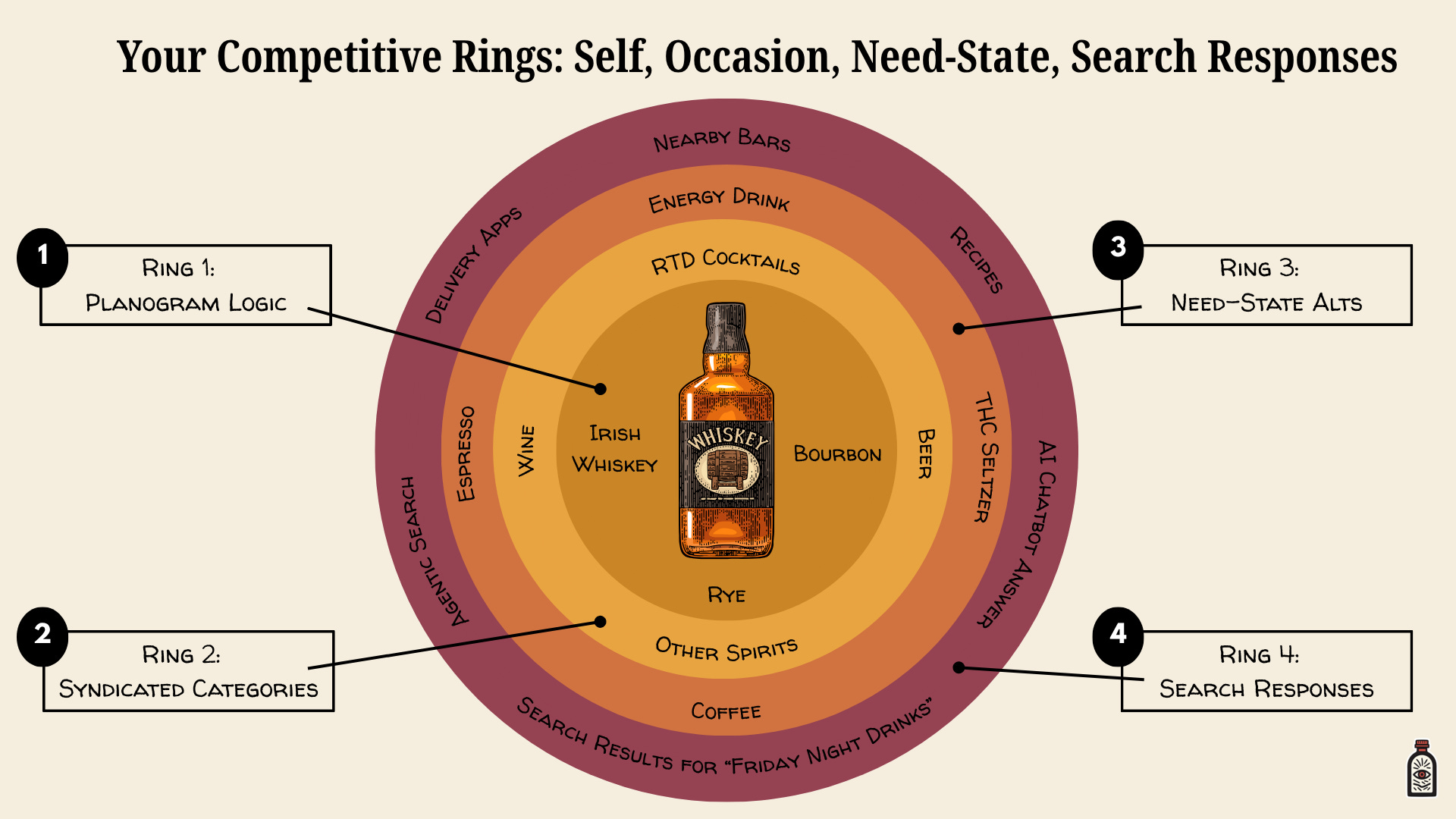
A reported CAGNY transcript further quotes management describing expansion into “the social gathering segment amid declining alcohol consumption.” Celsius doesn’t live in the energy drink aisle in the consumer’s mind. It lives in the pre-social energy occasion, and in that occasion it can compete with a shot of espresso, a beer, and the decision to stay home. The syndicated data measuring Celsius’s share of the energy category is likely measuring the wrong competitive set. The available data doesn’t cleanly separate incremental occasions from substitution away from alcohol.
Brown-Forman’s fiscal year 2026 results make the same point in reverse. The company’s broader RTD portfolio grew 8% in net sales, and New Mix grew 37%. The Jack Daniel’s RTD/RTP portfolio declined 3%, down 5% on an organic basis, driven by lower U.S. volumes alongside distribution issues in Canada and pricing headwinds in Germany. The broader Jack Daniel’s whiskey franchise remained a growth priority in the same period.
Two formats, one brand, diverging trajectories. What Brown-Forman’s results show is that category and portfolio labels flatten what’s actually happening at the occasion level. This suggests that Jack Daniel’s RTD didn’t expand the brand’s occasions in a material way. It competed for the same moments the bottle was already losing to something else.
When the Query Replaces the Aisle
The commercial infrastructure is now being rebuilt in ways that make occasion logic operational at scale. In July 2024, Instacart launched Recipes, Occasions, and Bundles, a suite of merchandising tools designed to reach shoppers outside traditional aisle placements. Occasions are defined as curated cross-aisle collections around themes or moments. A consumer searching for spinach gets served a vegetable lasanga recipe featuring a branded pasta sauce. A summer barbecue occasion placement assembles products from across the store. The prompt, not the planogram, defines what goes together.
Instacart subsequently introduced an “out-of-aisle impressions” metric for recipes and occasions ad exposure; a holiday campaign for Bob’s Red Mill generated 85% out-of-aisle impressions, reaching shoppers who would never have encountered the product in their normal category path. By 2025 these tools were fully rolled out to Instacart’s 5,500-plus CPG advertising partners.
Most grocery trips are still largely aisle‑based, with digital surfaces being used to layer occasion logic on top of traditional category logic rather than replace it outright. Google launched its Universal Commerce Protocol in January 2026, open infrastructure for agentic commerce across discovery, buying, and post-purchase support. UCP itself is not organized around occasions (it's an agnostic protocol), but queries Google uses when demoing it are: finding a rug for a high-traffic dining room used for dinner parties, assembling a basket for a specific meal.
In an April 2026 McKinsey analysis with ICSC, researchers argued that as AI agents intermediate more purchase journeys, retailers will need to define each location by mission - convenience or discovery - rather than by category, pushing occasion and mission logic closer to the center of how stores are designed.
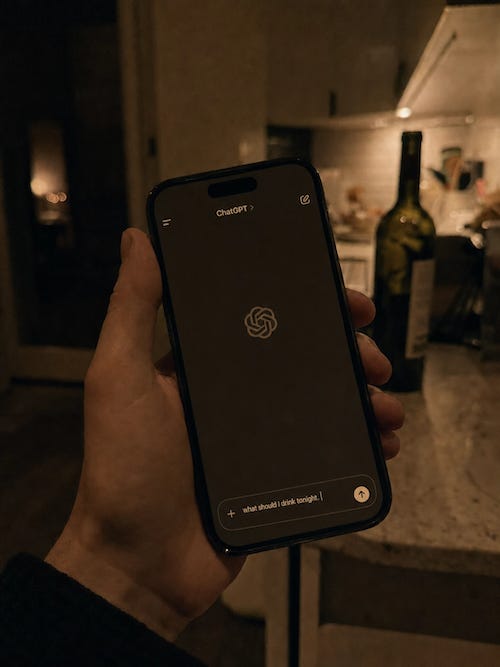
The prescription follows from the diagnosis. If the competitive set is whatever solves the same occasion, and if the occasion is becoming more selective, the strategic question is which occasions a brand owns clearly enough to be the answer when someone describes their evening to a search bar.
The brands still solely focused on legacy metrics like their share of category will have problems competing in this new world. The category is primarily a management technology. It only partially describes how people decided what to drink and that gap is widening as digital journeys become more mission and occasion‑driven.
Your competitive set is whatever comes up when someone describes their Friday night to a search bar. That search bar doesn’t know, or care, what aisle you’re on.