Why Gen X is the Most Important Consumer You're Ignoring


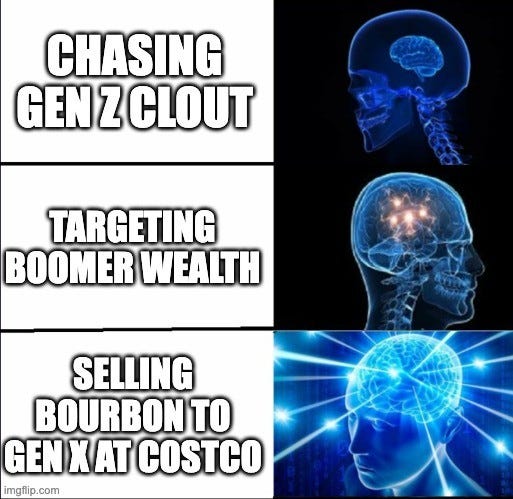
Everyone’s busy chasing Gen Z’s vibes and Boomers’ wallets. The narrative is clean, the targeting is easy, and the PowerPoints practically write themselves. But the real center of gravity in U.S. consumer spending is Gen X — quietly, consistently, and now officially on top.
While you were busy trying to decode what “no cap” means or figuring out how to sell reverse mortgages, the generation that gave us grunge, dial-up internet, and a healthy distrust of institutions has become the most powerful economic force at the checkout.
They’re not making noise about it. They’re just spending more money than anyone else, in more places, more often.
The Unseen Spending Power of a Generation That Doesn’t Need Your Validation
Let’s start with the numbers, because Gen X doesn’t care about your feelings and neither do spreadsheets. According to Numerator, Gen X now drives 34.1% of total U.S. spending across CPG, general merchandise, and quick-service restaurant. They’ve officially edged out the Boomers, who sit at 33.7%. The generation that was supposed to be too small and too cynical to matter has quietly become the biggest spending bloc in America.
But it’s not just about showing up. Gen X households are dropping an average of $25,468 per year across 824 shopping trips. That’s more than any other generation — more than the Boomers with their retirement nest eggs, more than the Millennials with their avocado toast guilt, and way more than Gen Z, who are still figuring out how credit cards work.
They dominate the categories that actually matter: Costco (where value meets volume), liquor (because they’ve earned it), and Amazon (because they were ordering books online when you were still in diapers). They’re the rare breed that will pay $60 for a bottle of bourbon and clip a digital coupon for paper towels in the same transaction. Premium taste, pragmatic execution.
What Makes Them Tick (Spoiler: It’s Not Your Instagram Campaign)
Here’s the thing about Gen X: they don’t give a damn about your brand purpose statement. They came of age in the era of “greed is good” and “just do it,” which means they’ve seen every marketing trick in the book and they’re not impressed. Gen X consumers care about three things:
Consistency: They don’t want brands that reinvent themselves every six months because some consultant told you to “stay relevant.” They want the same thing they bought last time, made the same way, at roughly the same price. Stability is sexy.
Value: And no, value doesn’t mean “cheap.” It means useful. It means durable. It means the kind of quality you can feel in your hands, not the kind you brag about on social media.
Quality: Not the performative kind. The kind that shows up when you actually use the product. Gen X grew up in the golden age of “they don’t make ‘em like they used to,” which means they remember when things were built to last. They’re not interested in planned obsolescence or subscription models that nickel-and-dime them into oblivion.

And here’s the kicker: many of them are “sandwich generation CFOs,” which is a fancy way of saying they’re bankrolling everyone. They’re paying for their kids’ braces, their parents’ prescriptions, and their own existential dread, all at the same time. This means their brand decisions don’t just affect them - they ripple across three generations. When you win Gen X, you don’t just win a customer. You win a household. You win a family tree.
You’ve Been Leaving Money on the Table
Gen X is more loyal than Millennials, who are still trying to figure out what they stand for. They’re less fickle than Gen Z, who will cancel you for a tweet from 2014. And they still control the checkout button for multiple generations - gatekeepers for an ecosystem of consumption.
Ignore them, and you’re missing the most predictable source of volume left in retail. Court them, and you get something rare in modern commerce: a customer base that actually sticks around. They don’t churn. They don’t hop. They don’t ghost you because a competitor made a viral video.
Once you earn their trust, they’re yours. And in a world where customer acquisition costs are skyrocketing and attention spans are measured in seconds, That kind of loyalty is everything.
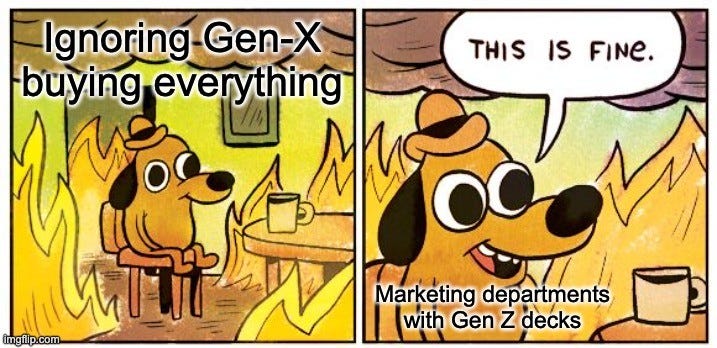
But here’s the problem: you’re not talking to them. You’re talking past them. You’re so busy trying to be cool, trying to be relevant, trying to win the approval of people who don’t have money yet, that you’ve completely overlooked the people who are actually spending it.
Reality Check Yourself Before You Wreck Yourself
Yes, Gen X is the current center of gravity in U.S. consumer spending — but let’s not pretend this is some eternal cosmic law. Their primacy is shaped by timing and demography. A lot of what I’ve said applies to older millennials (like myself) as well.
Marketers who neglect this cohort are leaving money on the table, but the long-term play isn’t just “chase Gen X forever.” It’s about segmenting by life stage, not birth year. Brands need to balance “value and reliability” messaging with dynamic, cross-generational appeal, or they’ll miss the nuanced interplay of who’s actually holding the wallet in today’s households.
Gen X leads in spending share right now because they’re in their peak earning years, bankrolling both their kids’ college funds and their parents’ retirement homes. But demographic momentum and sheer population size mean Millennials will eclipse them in aggregate spending over the next five years. Gen X’s reign isn’t permanent. It’s just happens to be well-timed to now.
And let’s be clear: “value” and “quality” aren’t Gen X exclusives. Boomers are dropping serious cash on premium spirits, high-end travel, and gourmet foods. Millennials and Gen Z are driving growth in craft cocktails, mid-tier spirits, and high-end RTDs.
Gen X skepticism and “no-nonsense” attitudes are real - but that doesn’t mean they’re immune to good storytelling. Brands can absolutely connect with Gen X using nostalgia (hello, Stranger Things and 90s retro), smart humor, and a track record of reliability. Value-driven messaging works, but emotional resonance isn’t off the table. They’re cynical, not dead inside.
The Archetypal Consumer
So who is the most powerful consumer in America right now? It’s not a trend-chasing twenty-something documenting their morning smoothie routine. It’s not a luxury-loving retiree with a taste for cruises and commemorative coins.
The most powerful drinker in America - and by extension, the most powerful consumer - is a 52-year-old Costco member who doesn’t care about TikTok but will reward brands that deliver real value and lasting credibility.
This person is your North Star. They’re at Costco every other Saturday, not because it’s trendy, but because it works. They’re buying the Kirkland Signature tequila and the name-brand bourbon in the same cart. They don’t need your brand to have a personality. They need your brand to have a product that doesn’t suck.
This is the silent majority at checkout. They’re not loud. They’re not flashy. They’re not going to tag you in a post or share your content or participate in your brand activation. But they’re going to spend more money, more consistently, in more categories, than any other generation. And if you’re smart, you’ll acknowledge them.