
The Seeker-Sensitive Bar

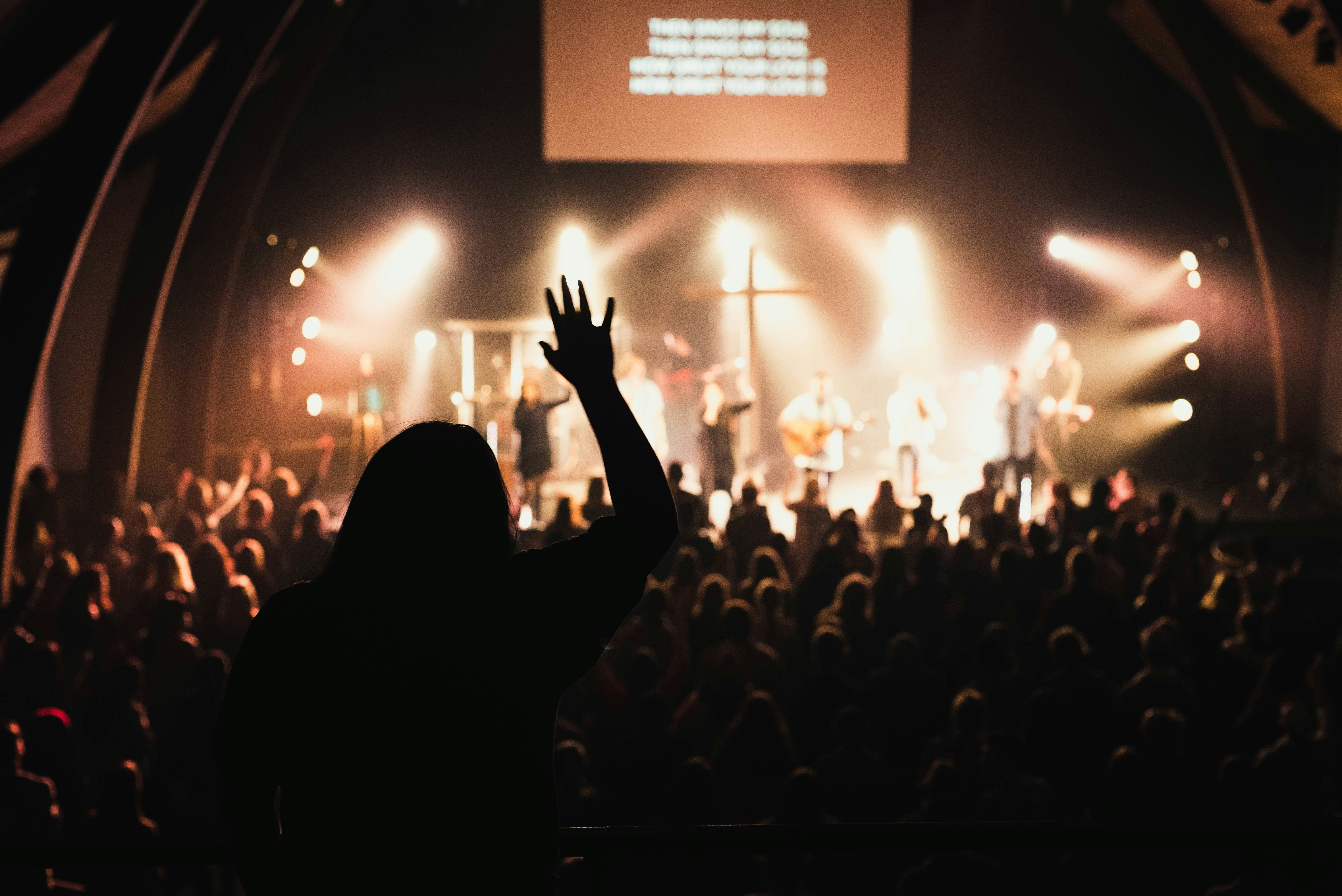
If you want to know what the alcohol industry is going to look like in ten years, you shouldn’t be looking at other consumer packaged goods. You shouldn’t be looking at the snack aisle or the beauty counter or the energy drink cooler.
You should be looking at the American church.
Specifically, you should look at the panic that set into American Protestantism about twenty years ago, and the massive, expensive, well-intentioned mistakes they made trying to fix it. Because the beverage alcohol industry is about to make the exact same mistakes, for the exact same reasons.
Both organized religion and the alcohol industry are institutions that historically relied on ambient, habitual participation. For generations, you didn’t have to market church attendance or bar attendance. They were just the default social infrastructure of adult life. You turned 21, you went to bars. You had kids, you went to church. This is exactly what Robert Putnam was talking about in Bowling Alone. The participation was structural, not just individual.
And then, for both institutions, the structure collapsed.
According to Gallup, in the year 2000, 42 percent of Americans attended religious services almost every week. Today, that number sits around 30 percent. Among young adults, it’s closer to 22 percent.
The alcohol industry is staring down a very similar cliff. We talk about Gen Z moderating and the rise of GLP-1s. There’s the growing substitution economy. But the true bellwether is the same one the churches saw: frequency. The habitual, low-stakes, ambient visits are vanishing.
When the church realized young people were leaving, they panicked. And their response was to try and be cool.
This birthed the “seeker-sensitive” movement. The logic was simple: if young people aren’t coming to traditional church, the traditional church must be the problem. So they gutted it. Out went the liturgy, the stained glass, the hymnals, and the theological depth. In came the rock bands, the smoke machines, the coffee shops in the lobby, and the TED-talk style sermons. They tried to compete with the entertainment industry on the entertainment industry’s terms.
They engineered the friction out of the experience. They made it accessible. They made it premium. They eventized it.
And it largely failed.
The writer Dan Foster documented one version of this up close: a church that gutted its basement, brought in pool tables and an Xbox and a commissioned mural, papered the local high school with flyers, and built the kind of space that looked, on paper, like exactly what teenagers wanted. Almost none of them came. The failure wasn’t a marketing problem. Teenagers could tell, instantly, that the room had been built to be liked by them, and that recognition was enough to keep them out.
But more fundamentally, it failed because it misunderstood what people actually wanted. Young people weren’t leaving the church because the music was too old or the lighting was bad. They were leaving because the institution felt inauthentic and disconnected from their actual lives. When the church tried to act like a rock concert, it just looked like a bad rock concert.
And ironically, the young people who are returning to religion today are often seeking out the most traditional, high-friction, demanding forms of it.
They are looking for the Latin Mass, or simply for more Mass. Georgetown's Center for Applied Research in the Apostolate found that Gen Z Catholics now attend Mass at least monthly at a higher rate than Baby Boomers or Gen X, 39 percent to 35 and 30. The specific form matters less than the fact that the plain, unglamorous version, kneeling, a homily, no fog machine, is the one pulling them back in. They want something that asks something of them.
The same split is happening in my own tradition, and it’s not subtle. Reform and Conservative synagogues, the movements that spent decades removing friction, shorter services, English liturgy, and Bar Mitzvah lessons scheduled around soccer practice, are the ones losing young people fastest. Orthodox communities, the ones that ask the most of you: keeping kosher in a world that doesn’t, observing a full day of rest every single week, praying in a language most people had to be taught, are growing, and getting younger while they do it.
The only other Jewish institution that’s growing is Chabad, and it works on the opposite logic entirely. No membership required. No dues. And, in theory, if not always in practice, no judgment about what you do or don’t believe. Show up as you are. The rabbi knows your name before you know why you keep coming back. Chabad doesn’t remove friction by lowering the standard. It removes friction by refusing to make you prove yourself at the onset.
Those are the two models seeing growth. Everything in between is contracting.
Nobody joins an Orthodox shul because it’s convenient. They join, or stay, because the demands are the point. My grandparents’ generation fought hard to make Judaism easier to carry into an assimilated American life. Their grandchildren, it turns out, prefer it heavy.
The alcohol industry is currently in its seeker-sensitive phase.
We are looking at the decline in ambient drinking and we are panicking. And our response is to try and be cool. We are eventizing everything. We are building “experiences” and “activations.” In making the lighting more Instagram-friendly and the branding more lifestyle-adjacent, the industry is trying to make the bar compete with the internet on the internet’s terms.
Not all friction is the same friction. The industry’s mistake is treating it as one undifferentiated obstacle to remove. There’s ritual cost: showing up on the same night, being known by the bartender. This is a repetition that builds identity over time. And there’s access cost: door lists and nineteen-dollar cocktails. Ritual cost is what makes a regular. Access cost just makes people look elsewhere. The seeker-sensitive church didn’t fail because it removed access cost. It failed because in removing access cost, it also accidentally removed ritual cost, and mistook one for the other.
The bar, like the church, is a piece of social infrastructure. Its value runs deeper than the liquid in the glass, the same way the church’s value was never really about the coffee in the lobby. The friction itself isn’t the value, though. It’s a symptom. What it protects is something closer to standing: the suspension of who you are outside the room in favor of who you are inside it. The eighteenth-century coffeehouse wasn’t valuable because it was hard to get to. It was valuable because rank didn’t matter once you were in the door. When the bar or the church becomes frictionless, it isn’t just losing inconvenience. It’s losing a neutral ground where you don’t have to perform your job title or your net worth.
When we try to turn the bar into a frictionless content studio, we turn it into a bad version of the internet.
If the alcohol industry wants to survive the collapse of ambient participation, it needs to look at what is actually working in the religious world. It isn’t the megachurches with the fog machines. It’s the small, high-friction, demanding communities that offer genuine connection and a break from the optimized, frictionless modern world.
Look beyond the silliness of the name regularmaxxing and focus on the yearning driving that behavior. People don’t need another highly curated, premium lifestyle experience. They have enough of those on their phones. What they need is a place to be a regular. They need a place that requires them to show up, to know the bartender’s name, and to participate in the messy, unoptimized reality of physical community.
We don’t need seeker-sensitive bars. We need places that are confident enough to just be bars.